

About Arafah & themes
Inspired by the land of arafah
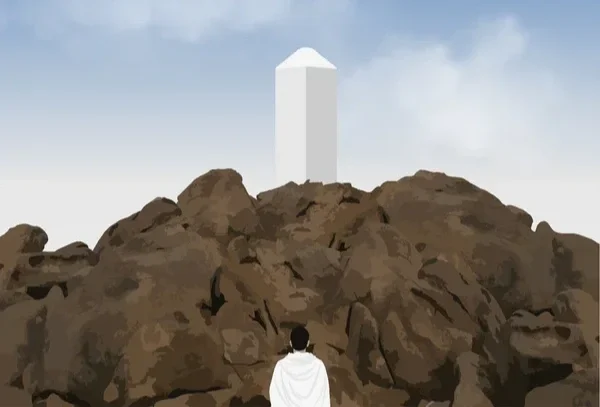
The Land of Arafah is an empty desert. There’s nothing there! So why does Allah (swt) instruct those on Hajj to spend a night there? You can either spend your time there sleeping - or in reflection, supplication, discussion, and more! You should take that time to connect with Allah (swt) in a way that best fits your needs.
Similarly, at Camp Arafah, we encourage attendees to seek what they need and maximize their time towards those goals. The themes are intentionally broad to allow attendees to curate their program to best fit their personal development goals.
Our goal is for attendees to use this experience to connect with one another, reflect on their values and these questions, learn and interact intimately with our scholars, and enjoy some fun activities together before the end of summer.
Camp Arafah Mission: To cultivate a space where Shia Youth in the West can renew the spirit of their faith - collaboratively with each other and with the guidance of our Islamic scholars - through knowledge, reflection, transformation, and action.
Arafah, Inc (CampArafah & ArafahRetreats) is an independent initiative not owned by any Islamic center or political party. Arafah, Inc is a 501(c)(3) public charity. We are grassroots and youth-led. Islamic Scholars are intimately involved with the vision, execution, and advising of Arafah programming to ensure our programs fulfill the spiritual needs of today's youth.
Join the team! Email CampArafah@gmail.com!
Retreat Culture: Curiosity & Community
Curiosity: A precursor to finding meaning
Inquiry: Our Shia tradition encourages asking questions as they are the gateway to seeking knowledge. We want to foster an environment where everyone feels comfortable asking questions, in a group or 1-on-1 setting, from our scholars. No question is too simple or dumb to ask.
Reflection: To truly be able to utilize our curiosity to gain knowledge, we need first to let go of preconceptions, biases, and superficial pride we hold as Muslims. This comes with acknowledging the question of “Do I know and believe that Islam is the truth?” Or am I simply following Islamic rituals because all the people around me are? We want to encourage this type of reflection as it unearths questions and hidden truths. A camp environment, surrounded by nature singing praises of God, naturally facilitates a space for reflection if we choose to tune in.
Discovery: Once the necessity for starting a journey towards The Infinite has been accepted, we encourage participants to begin discovering their identity and ultimately learning about God. God is always welcoming us with open arms, no matter where we are now or in our past. We recognize this journey will look different for everyone, but the point we want to emphasize is forming a relationship with God, and talking to Him, can be done like a friend!
Upholding Muslim identity when challenged in school/college/work environments?
Focusing on quality over quantity in worshipping God?
Making ritual worship more meaningful? Practically benefiting from Salah?
Community: A facilitator and vessel for God’s Love
Welcoming: One of Islam's main roles is serving as an equalizer in society. Race, class, ethnicity, culture, and gender do not make any difference in the value of a human, only his or her righteousness (إِنَّ أَكْرَمَكُمْ عِندَ ٱللَّهِ أَتْقَىٰكُمْ). We seek to uphold this value by actively welcoming new and old community members just as we’d like to be invited into a community, and making them feel like a part of us. We want to treat everyone as we’d like to be treated and hear out people’s thoughts and suggestions.
Connecting: The community we seek to build is a connected, supportive, and informed community. This means fostering a community space where members can express their problems, questions, and ideas, and in return, receive respect, privacy, and adequate support. Whether it be mental, spiritual, or physical help, we need to know the needs of our community members and provide appropriate support for them.
Following: Strong leadership and scholarship are the core of our communities. Our scholars serve to educate, orient, and oversee the community. We want to promote a culture where our scholars are deeply involved in community struggles and have close relationships with community members, especially the youth.
By participating in the retreat, attendees agree to the Code of Conduct, also located within the Camp Arafah App.
2026 Theme: Finding Fulfillment Only in God: Journey towards Spiritual Resiliency
رضا بقضائك وتسلیما لامرك
[Oh Allah, I am] content with Your decree and [in] submission to Your command. Imam Hussain (as), Final Statements*
Allah is not only our source of strength, but also our ultimate destination and the only true source of fulfillment. The words of Imam al-Hussain (ع) in his final moments beautifully capture this reality. Even at the height of world suffering, his heart remained fulfilled because it was anchored in Allah alone. His peace did not come from the absence of hardship, but from complete certainty that every decree, sacrifice, and moment of his life had meaning through God. This is the essence of spiritual resiliency: not merely surviving life's trials, but remaining inwardly whole because our fulfillment rests in the One who never changes. Any journey whose destination is not Him will ultimately remain incomplete. Any effort without God as the anchor will remain unsatisfied and unhappy. True fulfillment comes through striving toward Him, knowing Him, and aligning our lives with His will.
This year’s theme invites us to examine where we truly seek fulfillment. Every human heart longs for purpose, security, love, belonging, and success, yet when these become our ultimate objectives, they inevitably leave us dissatisfied. Wealth, achievements, relationships, status, and even our own abilities are limited and temporary. Tawheed teaches us to realign our inner compass so that Allah is not merely someone we turn to during hardship, but the purpose behind everything we pursue. Tawakkul, tawassul, repentance, sacrifice, and worship become expressions of this realignment. We are called to ask ourselves: Do I feel alone if Allah is with me? Do I trust that He is guiding and nurturing me? Is my purpose driven by my own desires or by His will? How do the Prophet, the Ahl al-Bayt (ع), and the believing community help orient me toward Him? Ultimately, we must recognize the difference between temporary happiness and lasting fulfillment: happiness may come from circumstances, but fulfillment comes from closeness, service, and submission to Allah.
Fulfillment is not measured by outcomes, but by proximity to Allah and faithfulness to His mission. When our compass is aligned with Him, we gain the clarity and strength to make the sacrifices required on our journey. Sacrifice for God is never about losing what we truly need, but about letting go of what we mistakenly believed we needed. Allah does not benefit from our sacrifices—we do. By releasing attachments that distract us from Him, we create space for something greater to grow and discover that He alone is sufficient. Only then can we be truly resilient.
Ultimately, finding fulfillment only in Allah is a journey of returning to our true relationship with our Creator: the relationship of the servant ('abd) whose purpose is to know, love, and worship Him. Every test becomes an invitation to deeper trust, every hardship an opportunity to witness His wisdom and mercy, and every sacrifice a means of freeing ourselves from what prevents us from reaching Him. Allah does not ask us to sacrifice because He needs anything from us; rather, He frees us from the illusions that compete for our hearts so that we can experience the fullness of life with Him. When Allah becomes both our means and our end—our refuge, our guide, and our destination—we develop a resilience that cannot be shaken by personal setbacks, household struggles, community challenges, or worldly loss. The journey toward Him is not merely the path to fulfillment; it is the fulfillment for which every soul was created.
وسوعة الامام علی بن ابی طالب(ع) فی الكتاب والسنة ، محمدی ری شهری ص 248 ؛*
قال سید الشهداء (علیه السلام)فی اللحظات الاخیرة من حیاته حینما كان یتمرغ فی الدم والتراب : رضا بقضائك وتسلیما لامرك لامعبود سواك .
*Encyclopedia of Imam ʿAlī ibn Abī Ṭālib (peace be upon him) in the Qur'an and the Sunnah, by Muḥammadī Rayshahrī, p. 248;
The Master of the Martyrs (peace be upon him) said, in the final moments of his life, while he was rolling in blood and dust: "Contentment with Your decree, and submission to Your command. There is no deity besides You."
2025 Theme: The Burning Desire to Return to God
ٱجْذِبْنِي بِمَنِّكَ حَتَّىٰ أُقْبِلَ عَلَيْكَ
[Oh Allah], draw me towards you through a burning desire, [so that I will come to you]. - Imam Hussain (as), Dua Arafah
The human journey has different stages. At first, we were with God. Then we came to this world and felt separated from him. Finally, after having gained what we came here for, we have to find our way back to God. Right now, the reason it is difficult for us is that we are lost. A place that could be so beautiful with God has become like a hell for us without Him. We look around and all we see is God‘s creation, but we struggle to find God Himself. As long as we have not moved past this stage, we are living in ghaflah, negligence.
The separation we feel in this world is not real, but in illusion. God is very present in our life and very close to us. The only problem is that we cannot feel his presence. We are so distracted by the creation that we cannot see the creator. But there is a way out, and that is the spiritual journey. But God initiates the relationship with him despite our distractions even when we disregard His signs and turn away from Him. God tells us all that as long as we hold onto Him and feel Him by our side, we will feel fine. God is there to take care of us, and even if we lose God and let Him go, He does not simply give up: He will come to us and help us find Him.
There are different ways of going this journey towards God. Imam Hussain (as) teaches us in Dua Arafah that the best and fastest way to get from distraction and go on the spiritual journey is JADHB, the sudden, strong, yearning, or burning desire that God puts in our hearts. Suddenly, we feel so much yearning for God that we manage to detach from whatever is holding us back. We then are able to find our way back to God. Without it, it can take a long time to still let go of what we are so attached to and find our path back.
This burning desire that God puts into our hearts is only a taste of what it feels like to return to God. It feels like a drop of water joining an ocean, a child returning to the loving embrace of his mother, a lover reuniting with their beloved after many years of separation or a person going back home after many years of living in a strange land. Like all of this and more! This yearning is a taste of what a reunion with God would feel like, and it is so sweet that the one who tastes it wishes for nothing else afterwards.
Through yearning, we will gradually reach a stage whereby distractions fade, and all that remains as God. Before we saw the creation, but could not see God; now all we see is God. His light shines so brightly that everything else fades into obscurity. This is the kind of experience that we all can – and should – have. Meeting God is the answer to all that we want and is what we have been looking for and everything that we have been doing.
We do not need to go on this journey alone: God is the one who takes us. All we need to do is choose God, and ask him to help us better feel his love. We must recognize our spiritual deficiencies and that we cannot achieve our spiritual destination of being with God, without His help. This is an act of submission. Put your trust in His plan and allow God to pull you to Him. All we need to do is choose God, and ask him to help us better feel His love.
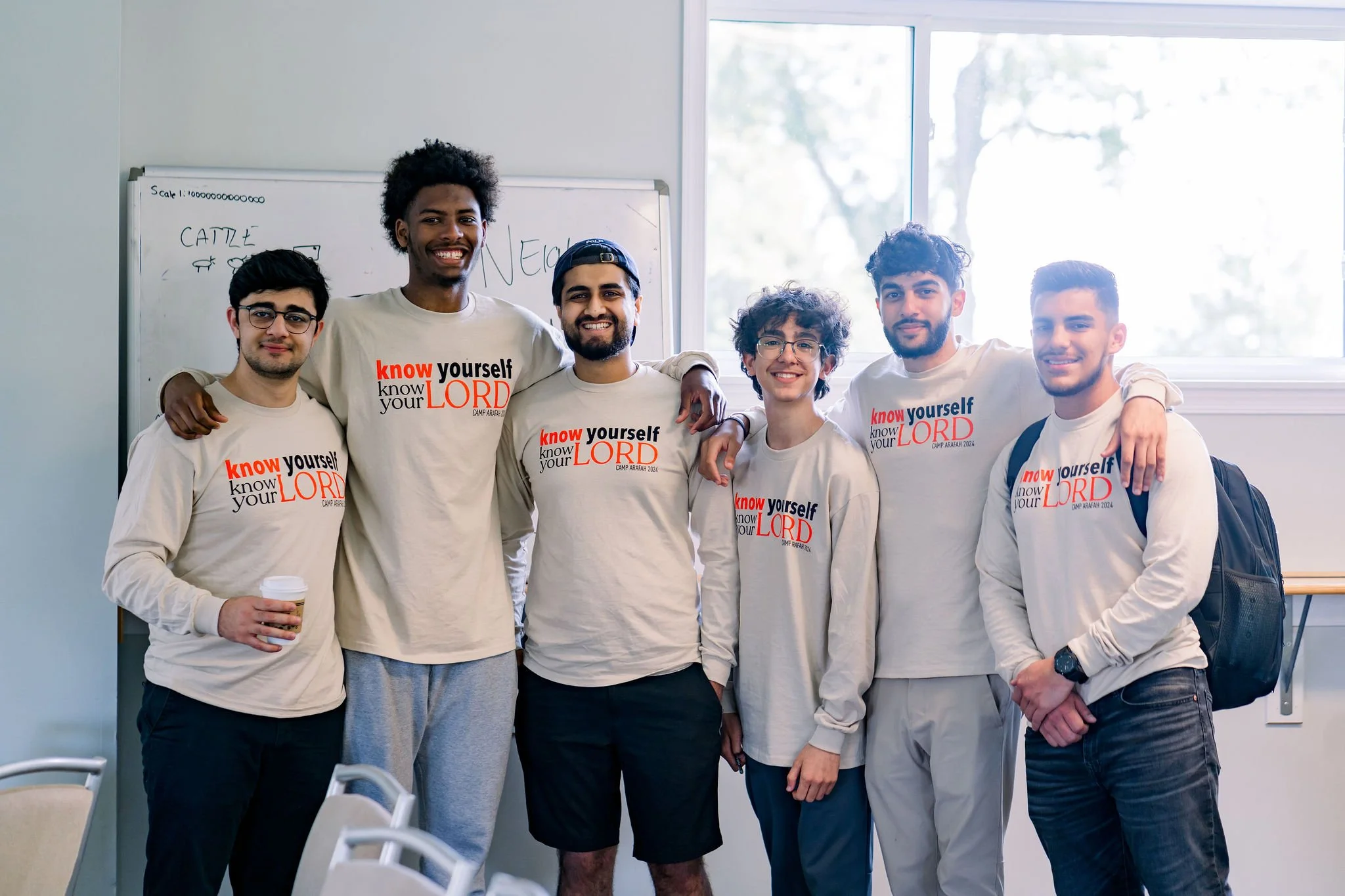
2024 Theme: What is 'The Shia Spirit'?
The concept of the Shia Spirit, though very broad and possibly subjective, encompasses all elements of our life in the West. To better understand Shia Spirit, we must posit the following questions to ourselves:
What is my identity as a Shia Muslim, and what are the values that are the foundation for that identity?
What are my red lines and how do I defend my beliefs? How do I build resiliency?
How do my Islamic identity/values conflict, intersect, or run parallel to those found in Western societies?
What does it mean to be a man in Islam? What is brotherhood? How do we become the best version of ourselves?
What does Islamic femininity mean? How do I build sisterhood? How do we become the best version of ourselves?
What is our spiritual composition? How do we remove barriers and build habits for active reflection to realign to our fitra and control the nafs?
Why do we need Imam Mahdi (as) and how do we establish our identity to be in service of him?
How do we build the infrastructure of Islamic community within our secular societies in preparation for the reappearance of the Imam of our time?
What are the elements of community-building?
How do we speak to Allah (swt) through dua and supplication? How do we build that relationship and find our language to connect with Him?
We encourage our speakers to contribute to this list and provide additional color into what conversations are needed to identify the Shia Spirit in the West.